











-
High-accelerated life testing and high-accelerated stress screening
Applying combined stresses far exceeding normal levels (such as rapid temperature cycling, multiaxial vibration, and electrical power bias) to induce potential defects in products within a very short time is often used to screen early-failure products in production batches and to help improve weak points in the design.
-
Continuous operation and load aging test
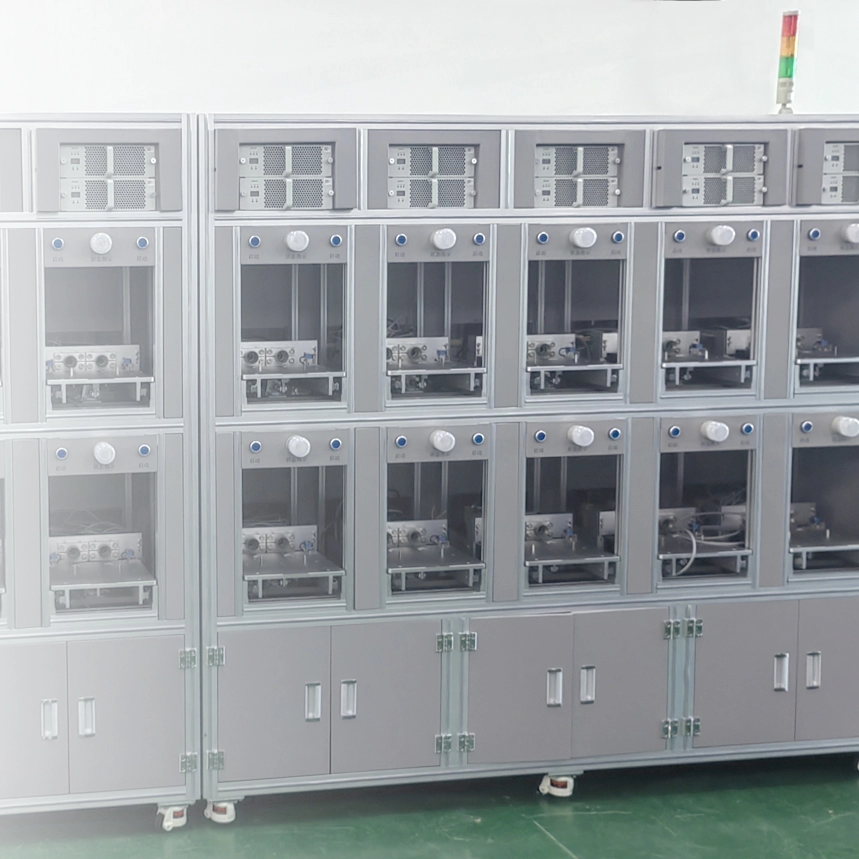
By subjecting the product to continuous operation under rated load or overload conditions for extended periods (e.g., 72 hours, 168 hours, or longer), simulating high-intensity user scenarios, product performance is stabilized, and latent faults caused by batch variations in components or process fluctuations are identified.
-
Data-driven reliability analysis and prediction
Throughout the aging process, key performance parameters are monitored and recorded.Based on failure data, data analysis is performed using reliability models (such as the Weibull distribution) to estimate the product's mean time between failures (MTBF), providing a basis for decision-making in quality improvement and after-sales service.