When you enjoy stunning visuals generated by AI or feel the instant thrust of an electric vehicle accelerating, you might not notice the behind‑the‑scenes factor that makes it all possible: heat dissipation and temperature control. In 2026, as high‑performance computing chip power consumption soars and EV penetration exceeds 48%, thermal management is rapidly shifting from a supporting role in industrial manufacturing to a core determinant of survival and success.
In 2025, the global thermal management system market reached US 14.04 billion, and by 2023 it is projected to climb to US 14.04 billion, and by 2032 it is projected to climb to US 21.85 billion, with a compound annual growth rate of 7.84%. Facing this surging demand, Shenzhen Yuanwang Industrial Automation Equipment Co., Ltd. (Yuanwang Intelligence) focus on industry frontiers, offering an in-depth analysis of the latest technological breakthroughs and how thermal management is reshaping the technology landscape in high-density computing and green mobility.
1. Data Center Cooling Challenges Usher in a Liquid Cooling Revolution
Traditional data centers rely primarily on air cooling. However, as AI computing clusters push rack power density beyond 50kW or even 100kW, and single GPU power consumption exceeds 1200W, conventional air cooling has reached its physical limits. Against this backdrop, liquid cooling is transitioning from a “supplementary solution” to a “core infrastructure”.
The cutting‑edge thermal management breakthrough lies in phase‑change liquid cooling technology. Some companies have developed a “normal‑pressure, water‑free two‑phase liquid cooling” solution that dissipates over 2000W from a single chip without a compressor, improving efficiency by more than 60% compared to traditional water cooling. At the same time, hybrid solutions combining “liquid cooling + phase‑change materials” have proven capable of controlling temperature differences within a battery pack to as low as 1.82°C, significantly enhancing system safety and stability. The widespread adoption of liquid cooling not only removes the thermal bottleneck to computing power growth, but also becomes a key engine driving the entire thermal management industry chain forward.

2. EV Thermal Management: From a Functional Component to a Core Competitiveness
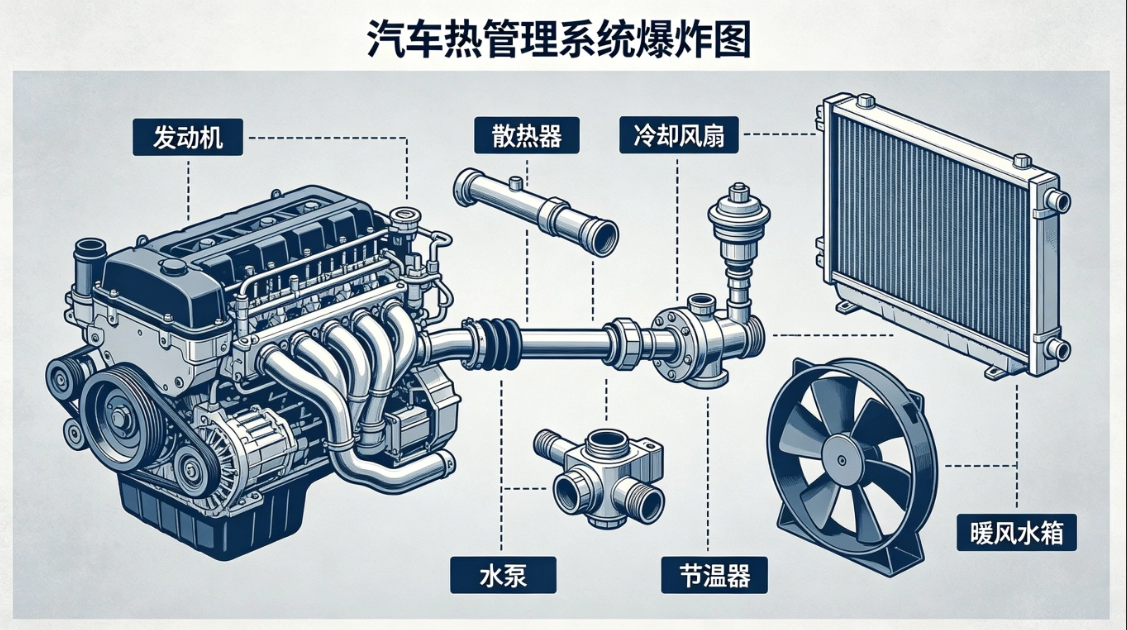
If the liquid cooling revolution is a necessity for the computing domain, then thermal management in new energy vehicles is an indispensable cornerstone for the full electrification of transportation. Unlike conventional internal combustion engine vehicles, which only need to cool the engine and condition the cabin, EV thermal management systems must comprehensively integrate temperature control for the battery, electric motor, power electronics (the “three‑electric” system), and the passenger cabin.
The most disruptive technological trend today is the “multi‑heat‑source cross‑domain integration”. By adopting advanced integrated valve bodies (such as eight‑way or nine‑way valves) and secondary circuit architectures, automakers can deeply integrate and centrally control multiple circuits – battery, motor, electronics, and cabin. This approach reduces the number of pipes and connectors, cuts system weight by 15‑22%, lowers costs by 12‑18%, and significantly alleviates “range anxiety”. The industry is moving from the pursuit of single‑purpose extreme performance to intelligent, connected, system‑level thermal management, achieving a “win‑win” for safety assurance and energy efficiency.
3. Industrial Heat Pumps Take Off: Policy Drivers Behind a Tens‑of‑Billions Market
The scope of thermal management extends beyond electronics and transportation. In early 2026, four Chinese government ministries, including the Ministry of Industry and Information Technology (MIIT), jointly issued the Implementation Plan for High‑Quality Development of Energy‑Saving Equipment (2026‑2028), designating industrial heat pumps as a key technology – a sign that industrial thermal management has risen to a national strategic level.
Driven by the “dual carbon” strategy, China’s heat pump industry is growing rapidly. According to industry association statistics, in 2024 China produced approximately 3 million heat pump units, with total sales reaching RMB 33.1 billion, accounting for more than 50% of the global market. In the industrial sector, the potential for thermal management is even greater – industrial energy consumption accounts for about two‑thirds of total societal energy use, and nearly 50% of that is discharged as waste heat. Effective recovery via industrial heat pumps would greatly accelerate the clean energy transition. The industrial heat pump market is expected to maintain annual growth of over 30% in the next 3‑5 years, potentially exceeding RMB 100 billion.
4. Trend Summary: Integration, AI‑Driven Control, and Material Innovation Shape the Future
Looking ahead, thermal management technologies will evolve in three major directions. First, system integration – moving from fragmented component supply to full‑stack system solutions, where hardware‑software co‑design becomes a core barrier to entry. Second, intelligent prediction and scheduling – deep integration of AI algorithms with thermal management domain controllers, enabling real‑time strategy adjustments based on sensor data, predictive maintenance, and dynamic load scheduling. Third, continuous material innovation – from phase‑change materials to micro‑channel designs, new materials are fundamentally improving heat transfer efficiency at the source.
From the large‑scale penetration of liquid cooling, to the integrated refinement of automotive thermal management, and the policy tailwinds for industrial heat pumps, thermal management technology is breaking through as the core foundation supporting future technological progress and green development.
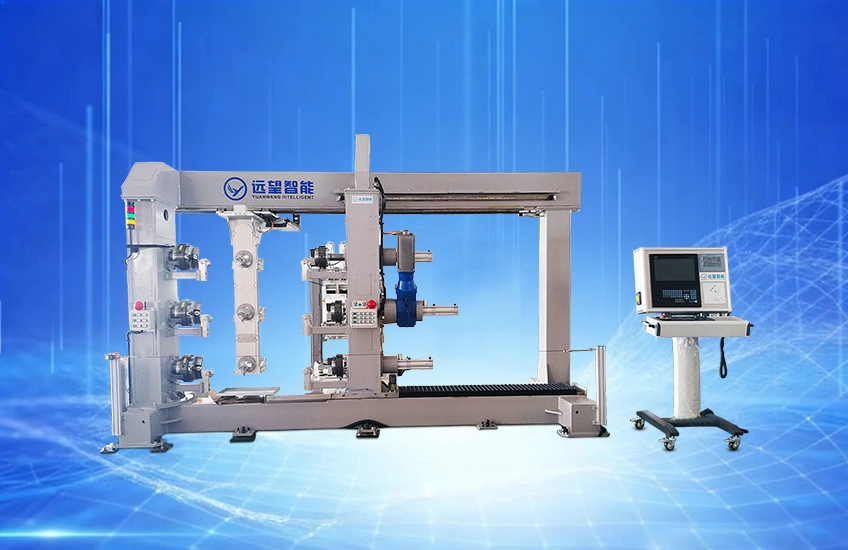
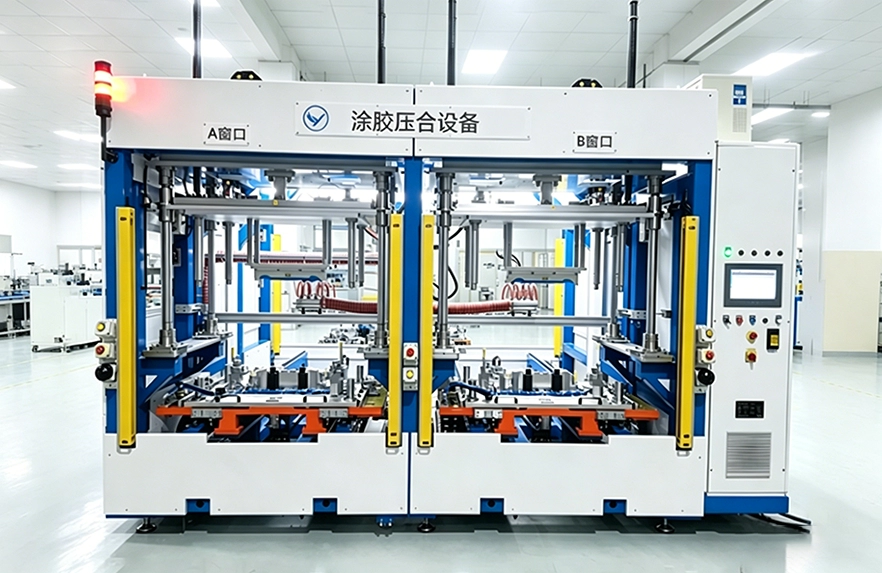
As a professional supplier deeply rooted in industrial automation solutions, Yuanwang Intelligence will continue to leverage its deep expertise in precision manufacturing and automation equipment integration, providing solid and effective technical support for clients in the thermal management of new energy vehicles, energy storage temperature control equipment, and intelligent manufacturing across various fields. Stay tuned to Yuanwang Intelligence for more industry insights.