I. Introduction
In semiconductor chip testing and sorting processes, after the test handler completes chip insertion into the carrier tape, the tape must be wound neatly onto plastic reels. Conventional semi-automatic or manual tape winding methods have inherent drawbacks such as high labor dependency and inconsistent quality. The introduction of the automatic tape take-up machine fundamentally changes this situation. The ARC40, developed by Shenzhen Yuanwang Industrial Automation Equipment Co., Ltd. (Yuanwang Intelligence) , is an automatic tape take-up machine designed for 7‑inch and 13‑inch reels. It achieves a fully unmanned workflow covering automatic empty reel loading, carrier tape insertion into the positioning slot, length‑based cutting, end‑tape application, and full‑reel automatic collection, significantly raising the automation level of back‑end packaging.
II. Automation Bottlenecks in Back‑end Tape Winding
Conventional semi-automatic or manual tape winding has three major pain points:
· High labor dependence – Actions such as winding, reel change, tape application, and unloading are separate, requiring a dedicated operator for each test handler.
· Inconsistent quality – Manual insertion of the carrier tape into the alignment slot results in positional deviations, and the adhesion force of the end tape varies, causing tape loosening during transportation.
· Limited machine utilization – Long manual reel‑change times cause frequent stoppages of the upstream test handler.
These issues have long made back‑end winding an efficiency bottleneck in assembly and test lines. The automatic tape take-up machine from Yuanwang Intelligence systematically eliminates these bottlenecks with dedicated mechanical structures and an intelligent control system.
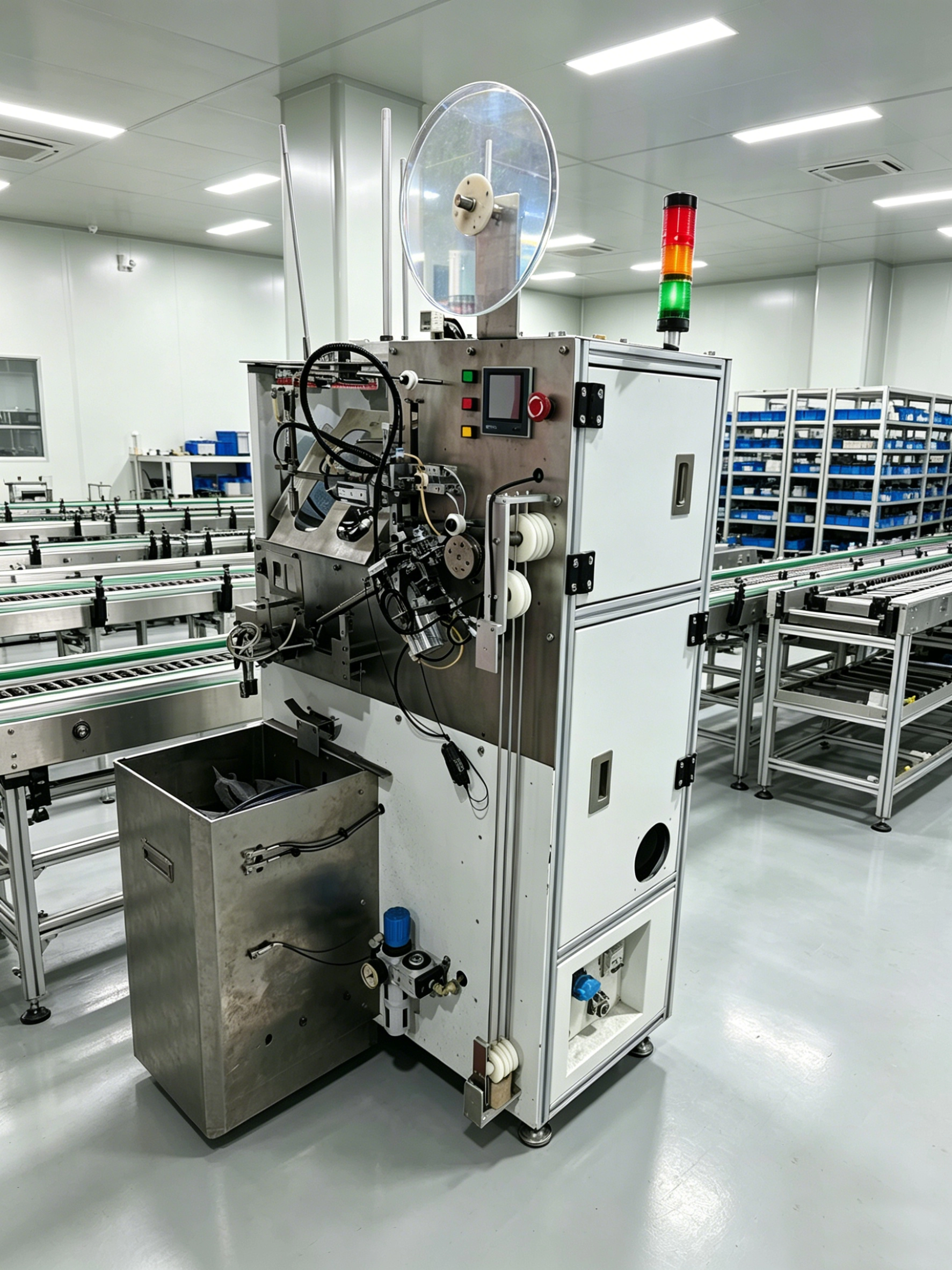
III. Core Automated Process Chain of the ARC40
The ARC40 adopts modular sequence control, with a PLC coordinating the process parameters set via the human‑machine interface (HMI). A complete winding cycle includes six core automated steps:
3.1 Automatic Empty Reel Loading and Positioning
The ARC40 is equipped with a storage magazine that holds 30 empty reels. Upon receiving a reel‑change ready signal from the upstream test handler, the machine uses a pneumatically driven pusher and a rotary pick‑and‑place arm to transfer empty reels one by one from the magazine to the winding spindle. After a photoelectric sensor detects the carrier‑tape insertion detection hole pre‑punched on the reel flange, the spindle servo motor rotates slightly to align the slot with the subsequent insertion station – positioning accuracy reaches ±0.5 mm, laying the foundation for precise carrier tape insertion.
3.2 Automatic Threading: Carrier Tape Insertion into the Positioning Slot
Carrier tape from the test handler enters the insertion mechanism of the ARC40 via guide channels. The mechanism uses a contoured pressing claw and a pneumatic gripper in coordinated action: the pressing claw pre‑holds the leading edge of the carrier tape, while the gripper advances the tape stepwise based on sprocket holes detected by a sensor, feeding the leading edge precisely into the already‑positioned reel slot. The entire threading process requires no manual intervention and accommodates different carrier tape widths and thicknesses specified by the customer for their product type.
3.3 Metered Winding and Automatic Cutting
This automatic tape take-up machine receives counting signals (number of chips or length of carrier tape) from the test handler. When the wound length reaches the lot‑set quantity, the control system immediately triggers a high‑speed cutting mechanism: a pneumatic cutting knife performs the cut while the carrier tape is still moving. Cutting time is less than 0.3 seconds, and the cut position is located close to the reel entry side, avoiding excessive or insufficient residual tape.
3.4 Automatic End‑Tape Application
Applying end tape is a critical step to prevent the wound reel from unspooling during transport. The ARC40 uses a label‑dispenser‑type tape applicator: the adhesive tape supply system automatically peels off the release liner; a pneumatic suction head picks a fixed length (typically 80–120 mm) of tape; while the reel rotates, the head presses the start of the tape onto the carrier tape surface; then a sponge pressure roller rolls over it 2–3 times, ensuring strong adhesion between the tape, the carrier tape, and the reel flange. The tape type can be paper or polyimide (PI) as specified by the customer.
3.5 Automatic Full‑Reel Unloading into Collection Bin
After tape application, the winding spindle reverses half a turn to release tension. A full‑reel pusher pushes the finished reel off the spindle, allowing it to slide automatically into a collection bin. The bin has a non‑jamming buffer structure and can hold 10–15 reels. Operators can remove them periodically rather than handling each reel individually.
3.6 Multi‑machine Operation Architecture
The ARC40’s HMI supports interlocking signals with the test handler. One operator can simultaneously manage the operation of six such automatic tape take-up machines via a central monitoring interface, intervening only for empty‑reel replenishment, full‑bin clearing, and alarm handling. Compared with the traditional arrangement of one or two operators per test handler, labor demand is reduced to 15–20% of the original level.
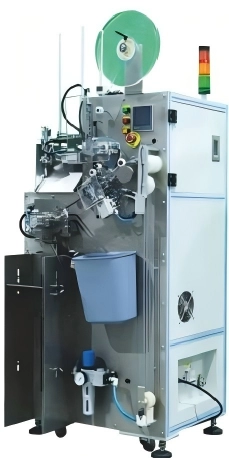
IV. Technical Specifications and Performance Parameters
It should be noted that this automatic tape take-up machine requires reels with a carrier‑tape insertion detection hole on the flange, and the applicable product type must be specified by the customer to ensure precise matching of the insertion mechanism and sensors.
V. Production Line Deployment and Efficiency Data
Actual application case: A memory assembly and test factory originally had 12 test handlers, each with one operator dedicated to tape winding, reel change, tape application, and packing. Two shifts required 24 workers.
After introducing Yuanwang Intelligence’s ARC40 automatic tape take-up machines:
· 12 test handlers were paired one‑to‑one with 12 ARC40 machines.
· The entire workshop now requires only 2 operators (one per shift) for roaming material loading and full‑bin clearing.
· Test handler downtime due to reel change was reduced from an average of 45 seconds per reel to 8 seconds per reel.
· The carrier‑tape loosening defect rate (end‑tape failure) dropped from 1.2% to below 0.1%.
· Based on average equipment price and retrofit cost, the investment payback period is approximately 9–12 months.
VI. Conclusion
With full automation of empty‑reel loading, threading, cutting, tape application, and unloading, the ARC40 – controlled by a PLC + touch‑screen HMI – achieves continuous production that matches the speed of the test handler. Its 95% utilization rate, one‑operator‑for‑six‑machines ratio, and broad compatibility with 7‑inch and 13‑inch reels make the ARC40 a highly efficient and reliable automatic tape take-up machine for semiconductor back‑end packaging. Against the backdrop of rising labor costs and increasingly stringent cleanliness requirements in chip packaging, this equipment provides a practical and effective path to higher quality and efficiency.